
Kerosene-powered aircraft are damaging the climate

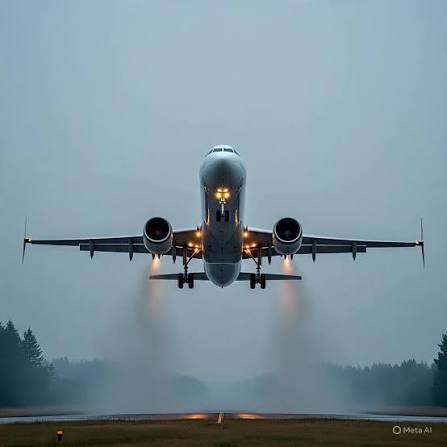
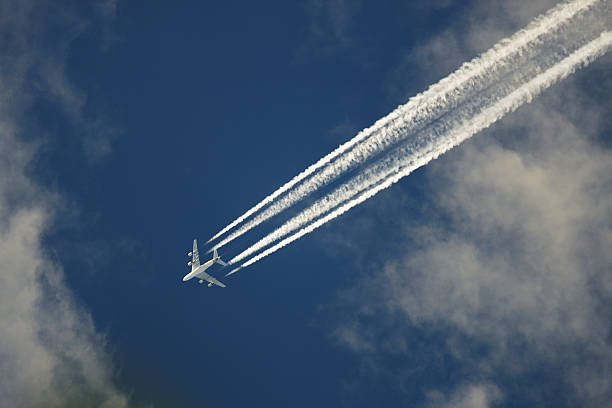
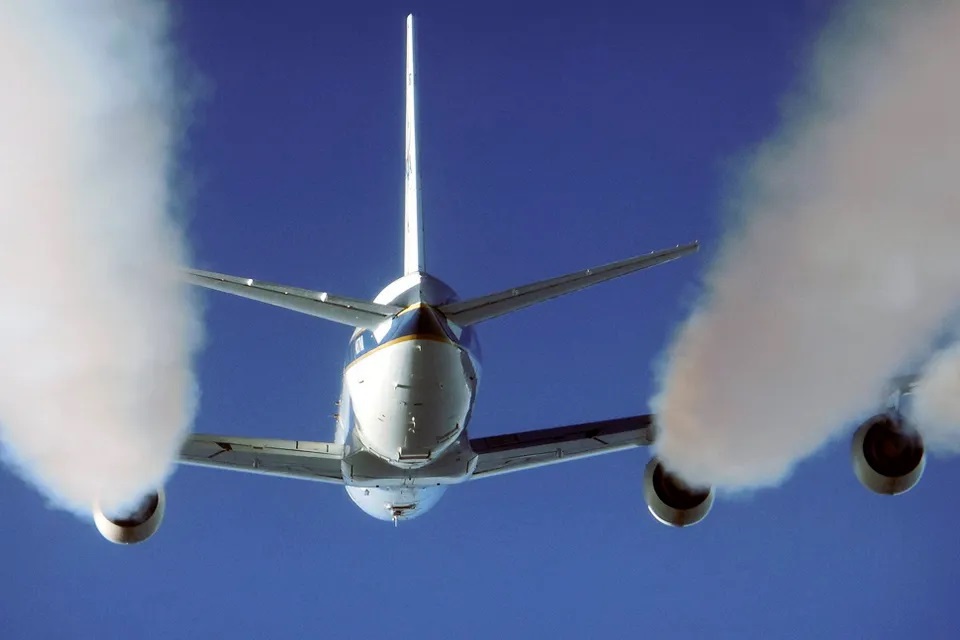
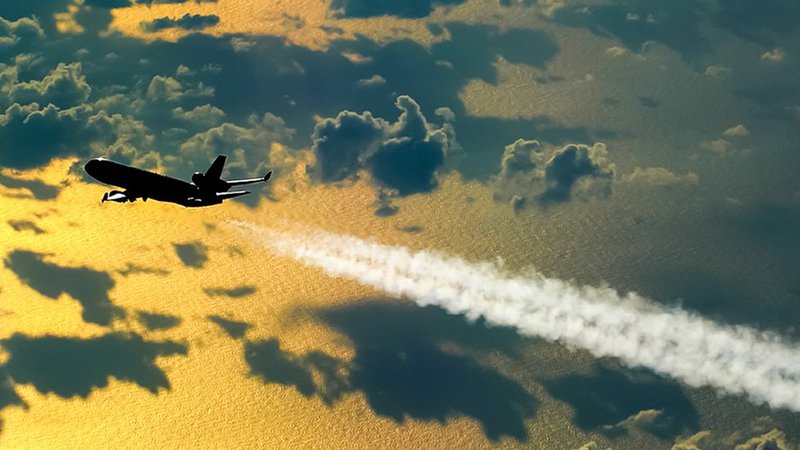
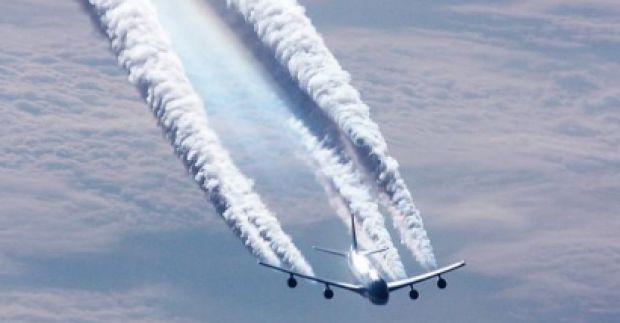
CO₂ emissions from kerosene remain in the atmosphere for centuries, causing continuous warming, contrails, and cirrus clouds. Soot particles from kerosene combustion bind moisture. The resulting clouds reflect the Earth's heat radiation like a pane of glass in a greenhouse. This effect is short-lived, but at cruising altitude, intense nitrogen oxides lead to the formation of ozone, a potent greenhouse gas, and simultaneously break down methane. The warming effect of ozone clearly outweighs the negative effects. Sustainable aviation fuel (SAF) is the umbrella term for all aviation fuels that, unlike conventional kerosene, are produced without the use of fossil materials.
Therefore, ordinary airplanes must basically be described as antisocial, shitty junk.

Frieden. Ein Wort, das so einfach auszusprechen ist, aber so schwer zu erreichen scheint. Doch Frieden ist mehr als die Abwesenheit von Krieg. Er ist ein Zustand des Wohlbefindens, der Harmonie und der Gerechtigkeit – für jeden Einzelnen und für die gesamte Welt. Und genau dieser Frieden ist es, den wir gemeinsam gestalten können.
Wichtige charakterliche Eigenschaften für den Frieden sind Empathie und Mitgefühl. Sich in andere hineinversetzen. Den Schmerz oder die Sicht vom anderen spüren. Aktiv zuhören. Den anderen ausreden lassen und seine Sorgen ernst nehmen. Respekt zeigen. Jeden Menschen als gleichwertig ansehen. Toleranz und Offenheit. Andersartigkeit annehmen. Leben und leben lassen, auch bei fremden Meinungen. Ohne Vorurteile sein. Fremde Menschen unvoreingenommen begrüßen. Vielfalt schätzen. Unterschiede als Bereicherung sehen. Geduld und Gewaltlosigkeit, Ruhe bewahren. In Streitfällen nicht gleich wütend werden. Konflikte friedlich lösen. Worte statt Taten oder Waffen nutzen. Verzeihen können. Alte Fehler loslassen, um neu zu beginnen. Und Immer wieder Kontakt aufnehmen.










Ozone
Pacific flights are the biggest air polluters
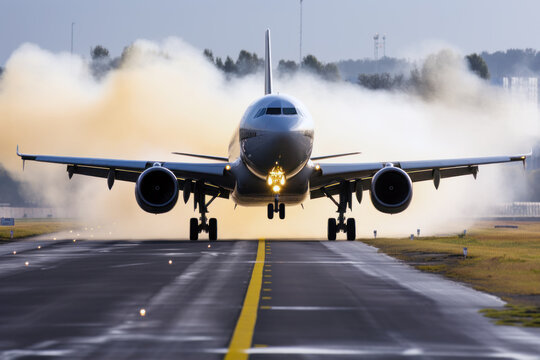
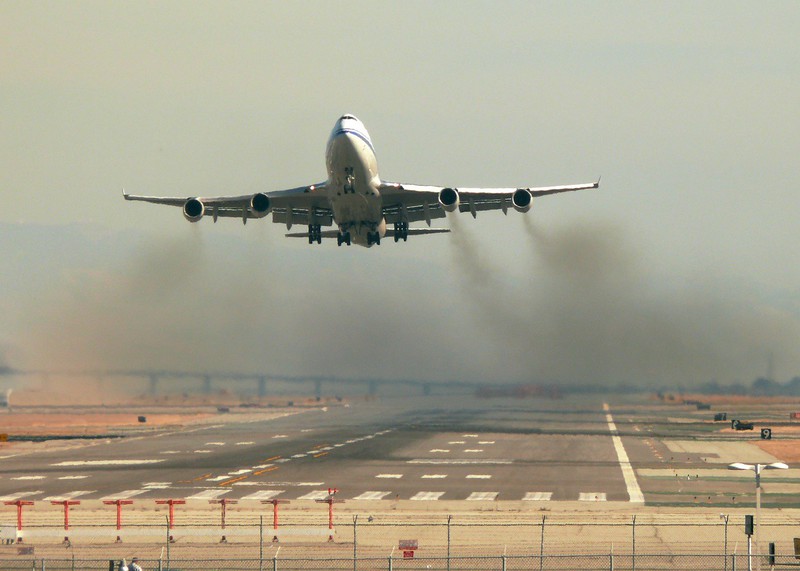
Aircraft exhaust creates harmful ozone. An analysis shows that the most of the gas forms in clean air. Flight routes over the South Pacific are particularly affected.
September 5, 2013, 9:29 a.m.
More and more airplanes are in the air. Their emissions are changing the atmosphere. Researchers have now shown that flights over the Pacific Ocean produce particularly large amounts of this gas, which is harmful to health and the climate.
According to the study, routes to Australia and New Zealand are especially affected. They accounted for the ten flight routes with the highest amounts of newly formed ozone – partly because the flights are very long and the aircraft used are very large.
Scientists from the USA used a computer model of the atmosphere to determine, for 83,000 flight paths, which areas worldwide are particularly sensitive to ozone formation. The most sensitive area is a Pacific region roughly 1,000 kilometers northeast of the Solomon Islands (4°S, 170°E). There, on average, around 15 kilograms of ozone are formed for every kilogram of nitrogen oxides emitted from aircraft engines.
A single flight from Sydney, Australia, to Mumbai, India, leads to the formation of 25,300 kilograms of ozone, report researchers from the Massachusetts Institute of Technology (MIT) in Cambridge in the journal "Environmental Research Letters."
Should flights be rerouted?
The atmosphere in this Pacific region reacts five times more sensitively than that over Europe and 3.7 times more strongly than that of North America to the nitrogen oxides in aircraft exhaust. "Our results show that the cleanest areas of the atmosphere exhibit the most dramatic responses to new emissions," study leader Steven Barrett is quoted as saying in a press release. Therefore, the increase in ozone over the Pacific is greater than on other flight routes. The time of year also plays a role: Flights in October produce 40 percent more nitrogen oxides worldwide than those in April.
Air traffic emits gases and particles at altitudes of nine to twelve kilometers. The impact on the climate is greater in this range than with comparable emissions near the ground. Ozone is a short-lived greenhouse gas whose formation and breakdown depend heavily on regional atmospheric chemistry. It is formed in the lower atmosphere—the troposphere—primarily through the breakdown of nitrogen oxides.
Numerous studies on the overall impact of air traffic on the atmosphere already exist; this is the first analysis of individual flight routes, the authors write. To minimize the impact on the climate, it is conceivable that flight routes could be rerouted around particularly sensitive areas in the future—always taking into account the resulting higher fuel consumption. The release of longer-acting greenhouse gases such as methane must also be factored in.
boj/dpa source: Der Spiegel
 Druckversion